
UIUX
BRANDING
WORDPRESS
RESPONSIVE WEB
Role
UI/UX Designer
Timeline
Novemeber 2025 - Present
Skills
UX Research Review & Synthesis, User Journey Mapping, Visual Design, Interface Design, Interaction Design, Prototyping, Stakeholder Management
Background
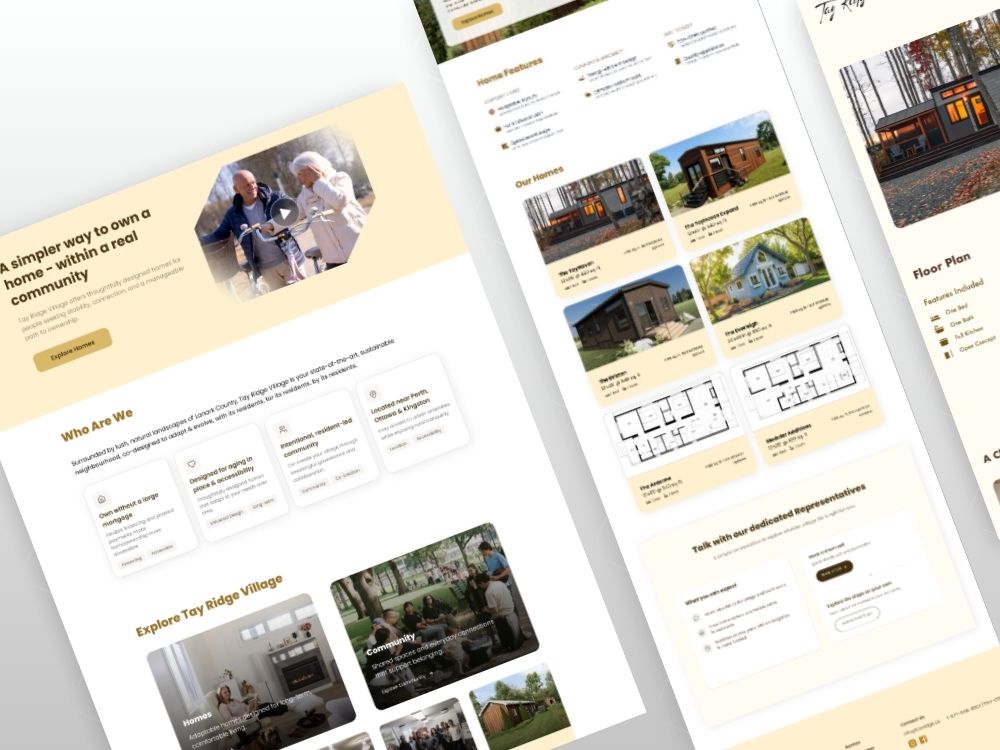
Tay Ridge Village is a community-led housing project. The homepage needed to help users understand the value of the homes, explore options, and feel confident reaching out — without feeling rushed or marketed to.
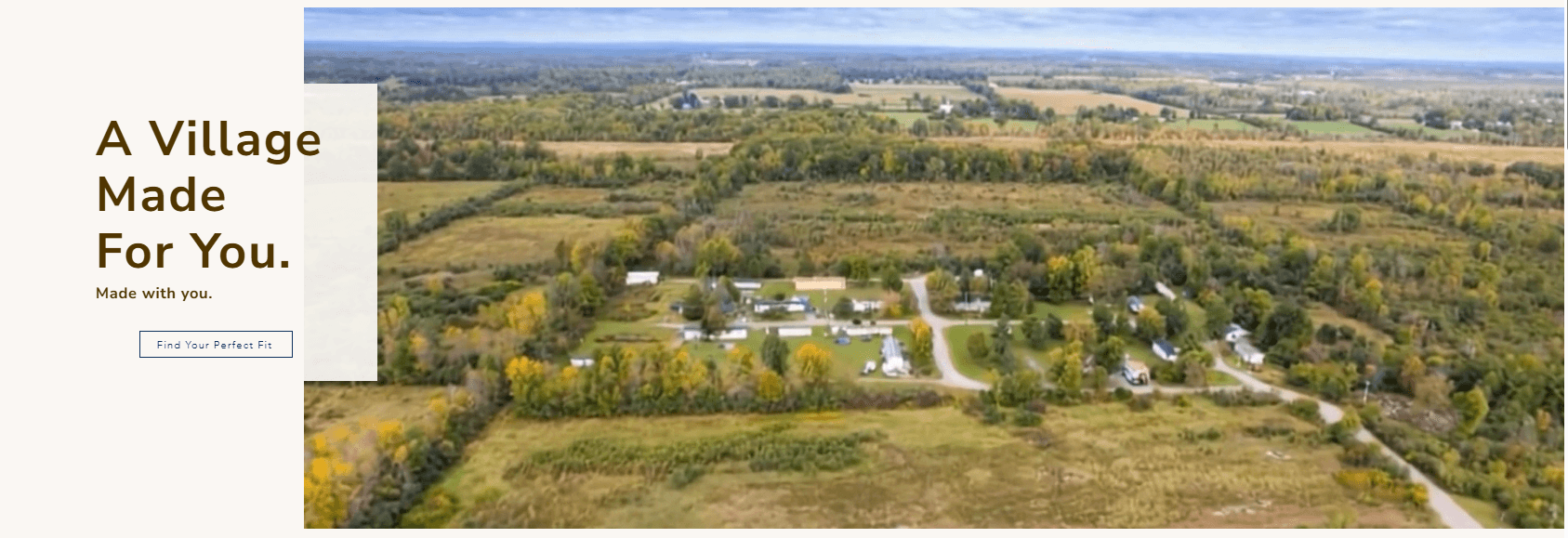
When I joined, the website was already built in Wix with a very minimal interface. My role was to reassess existing research, user journeys, and content, then redesign the homepage flow to improve clarity, build trust, and support confident decision-making—without introducing aggressive marketing patterns or disrupting the project’s values.
The Problem
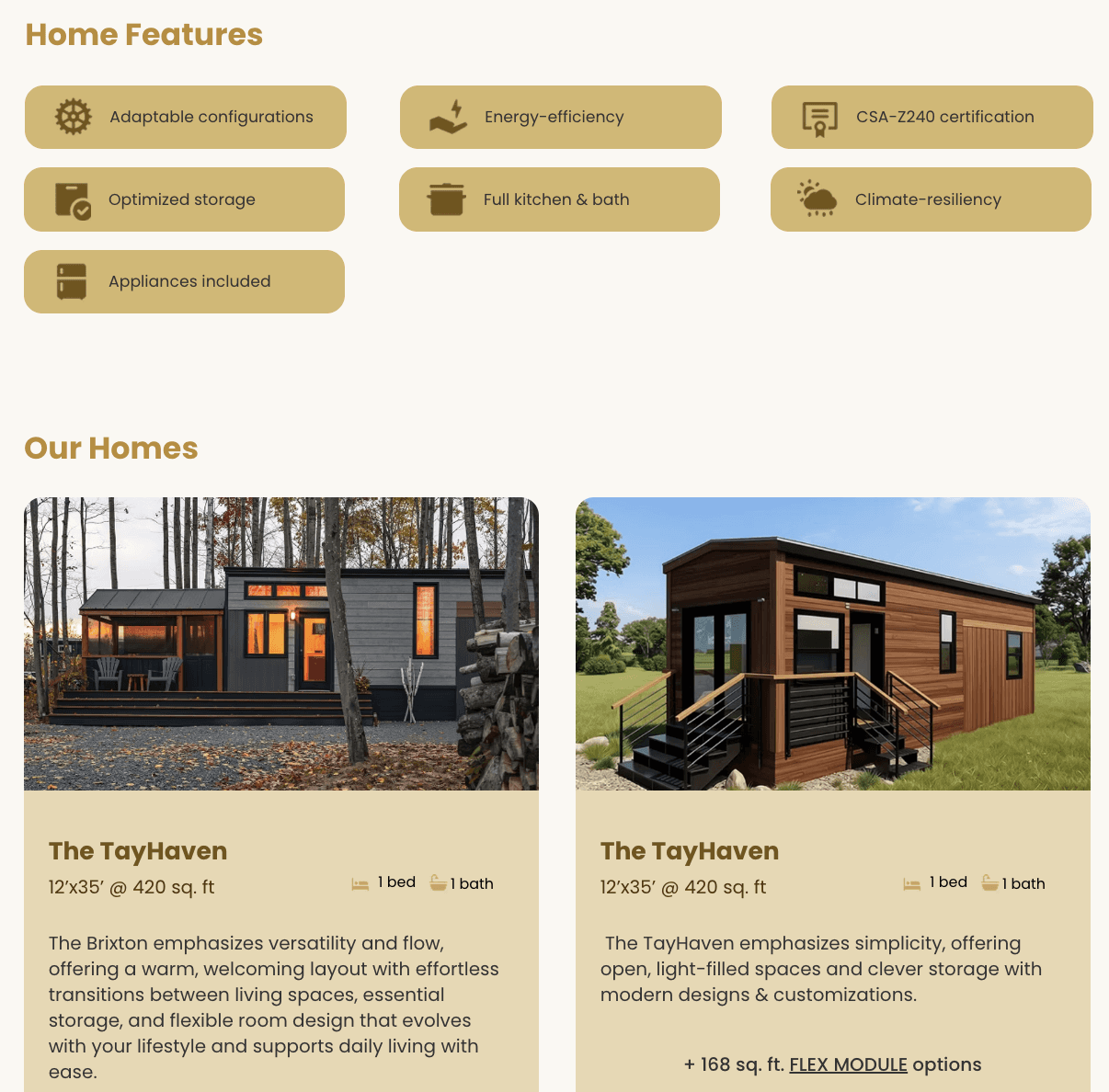
Users were asked to process a lot of information at once — home features, community values, and next steps — with little hierarchy.
The page felt visually monotone, and transitions between sections were unclear, making it harder for users to move confidently from learning to exploring.
Design goals
To create a structured flow that guides users through the content hierarchy while keeping the design simple enough to support faster development.
Reduce cognitive load while preserving key information
Create a clear flow from understanding → exploring → connecting
Build trust without using aggressive marketing patterns
Keep the experience calm, accessible, and human
Research & Re-Validation Phase
Before proposing changes, I needed to re-ground the design in real user needs.
What I reviewed
Existing content and site structure
User journeys already defined by the team
Interview notes and qualitative feedback
Business goals vs. user goals
I intentionally avoided “performative fixes” and focused on understanding what decisions users were actually trying to make.
User Journey Analysis
Primary user intent
From research and interviews, I identified that users were trying to answer 3 core questions:
01
"Is this community right for me?"
02
"What are the homes actually like?"
03
"What happens if I want to take the next step?"
What the user journey analysis revealed
Example of specific findings:
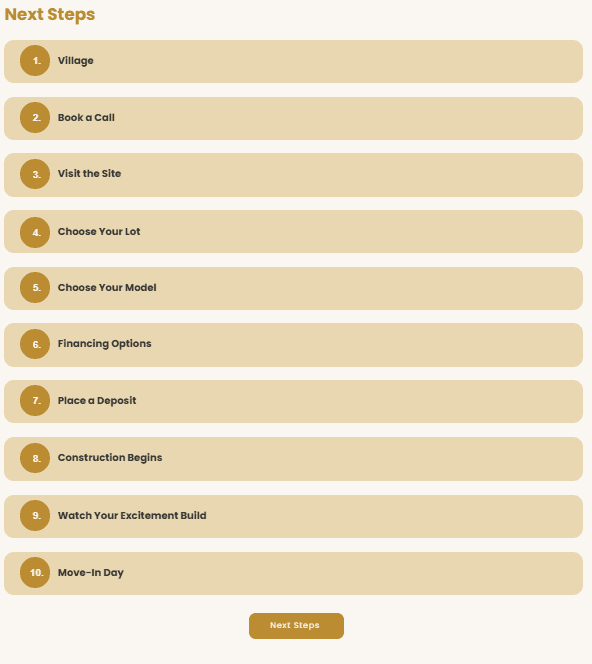
Navigation doesn’t reflect the primary user journey
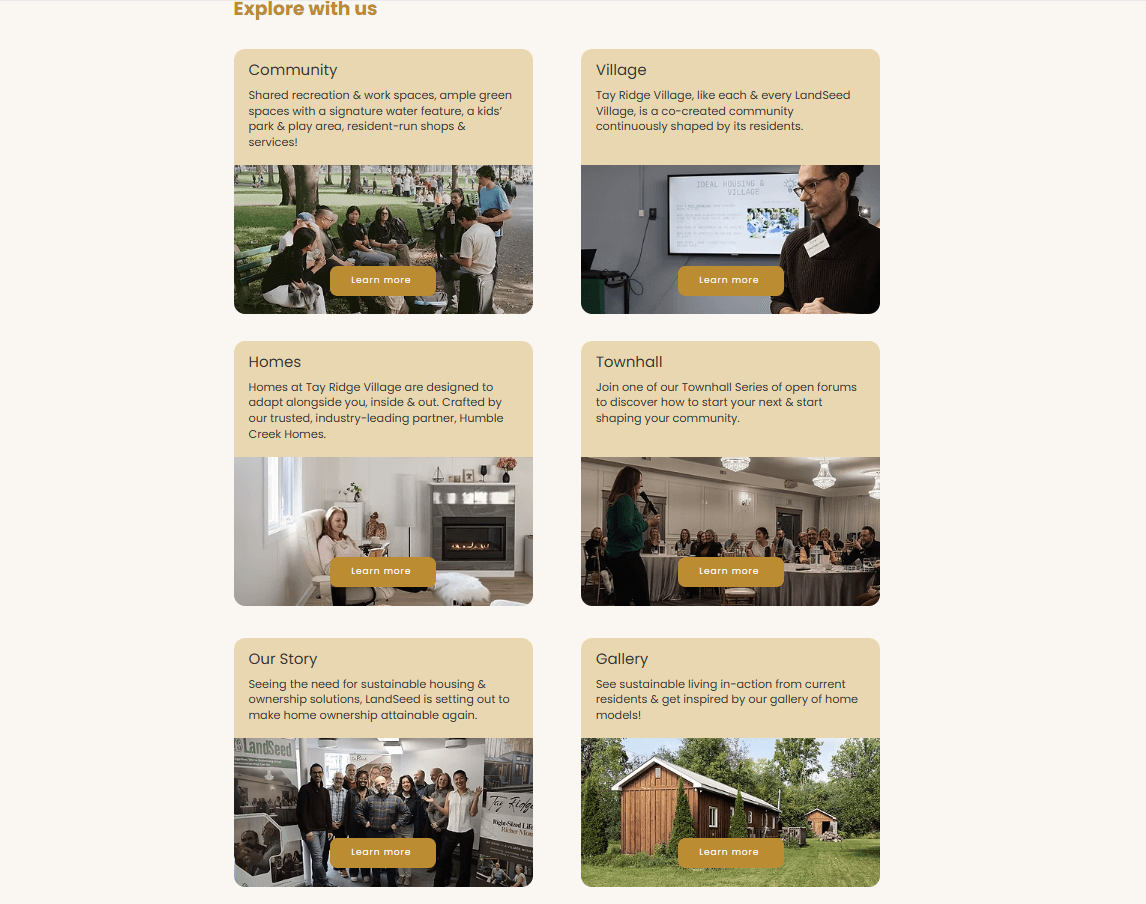
The content is dense and hard to scan
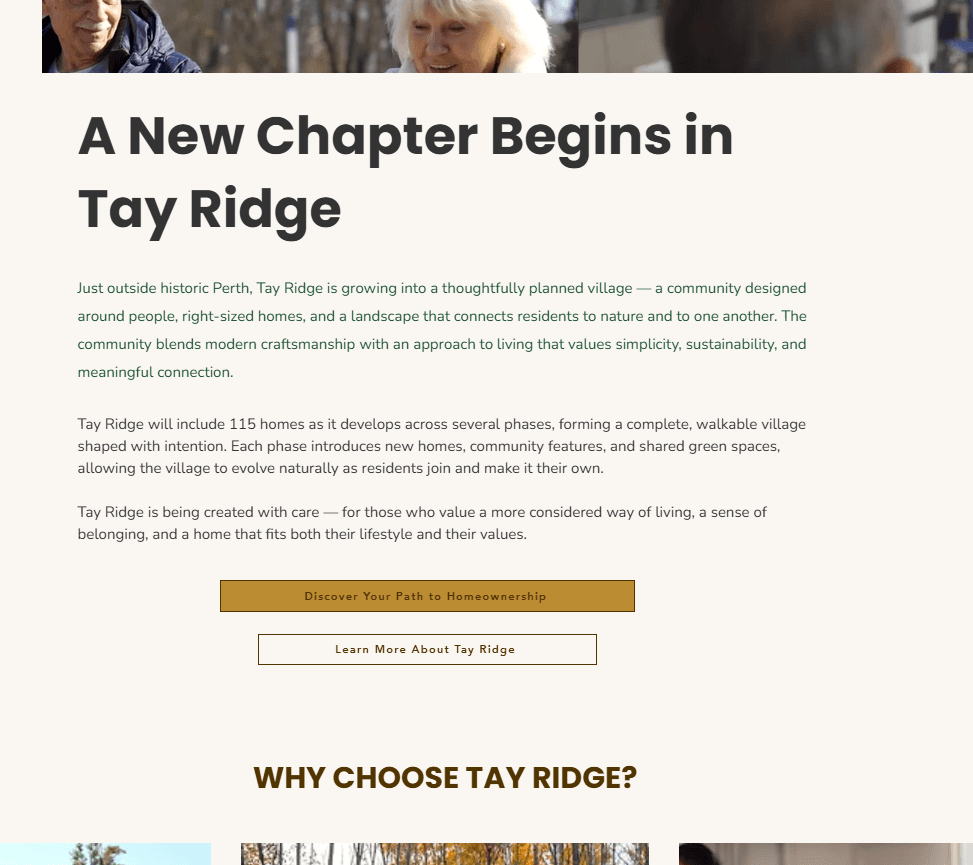
Features and home models were separated visually, even though users mentally grouped them
Trust-building elements (like testimonials) were missing before key decision points
4. Wireframe Redesign
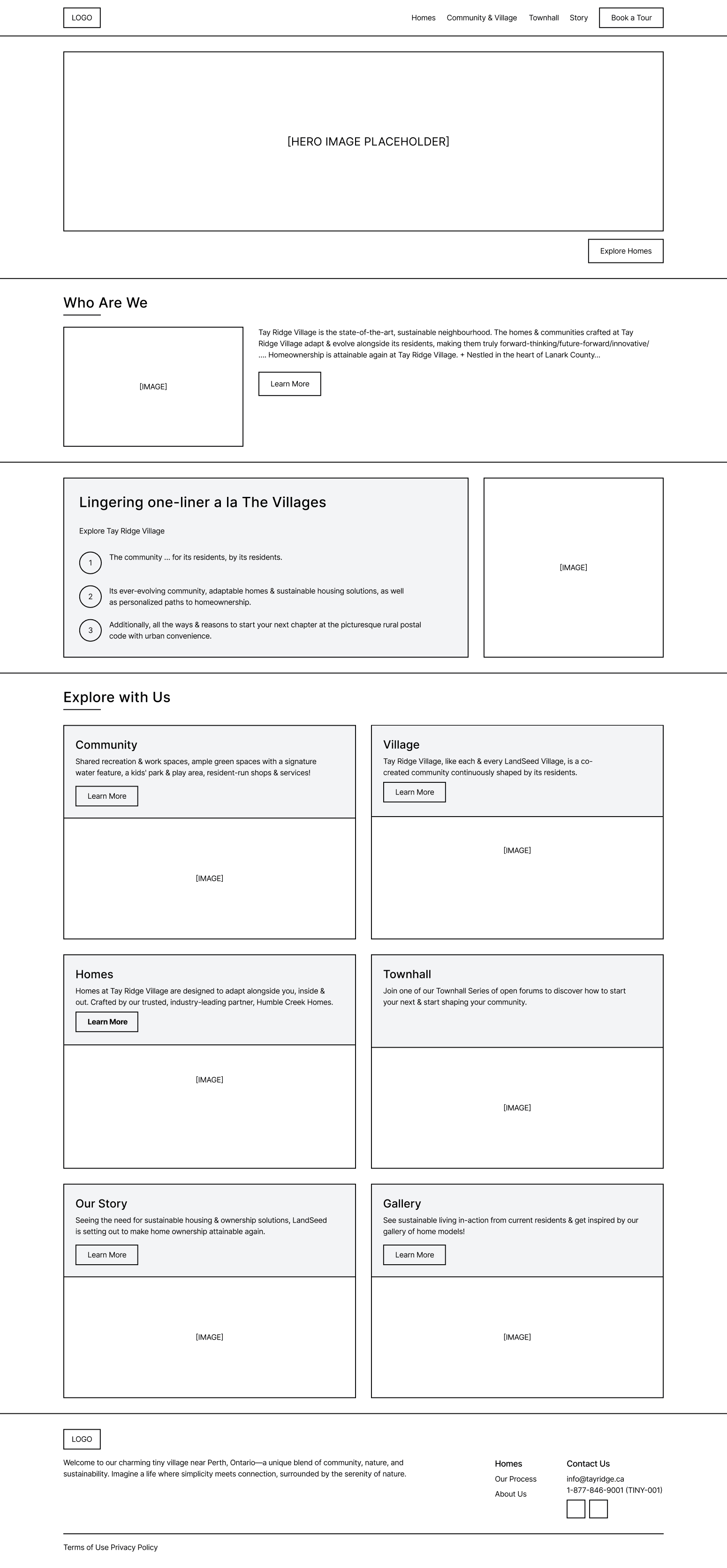
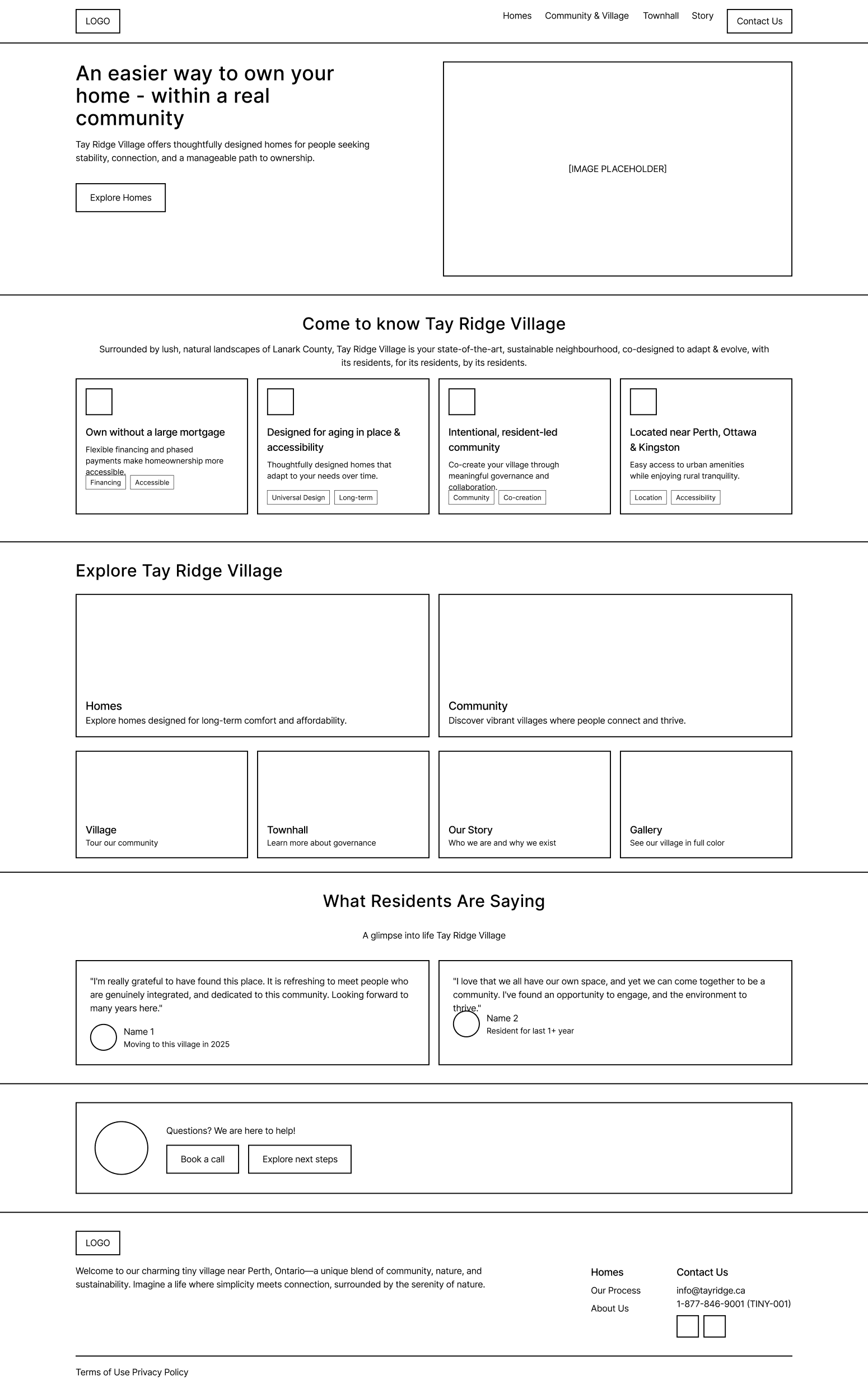
I redesigned the structure to follow the user’s mental progression, not the site map.
Old wireframe
New wireframe
Key improvements of the new wireframe
01
From fragmented sections → a clear narrative flow
02
From equal visual weight → intentional hierarchy
03
From information-heavy blocks → scannable, decision-supporting content
04
From abrupt CTAs → trust-building decision moments
UI Enhancement
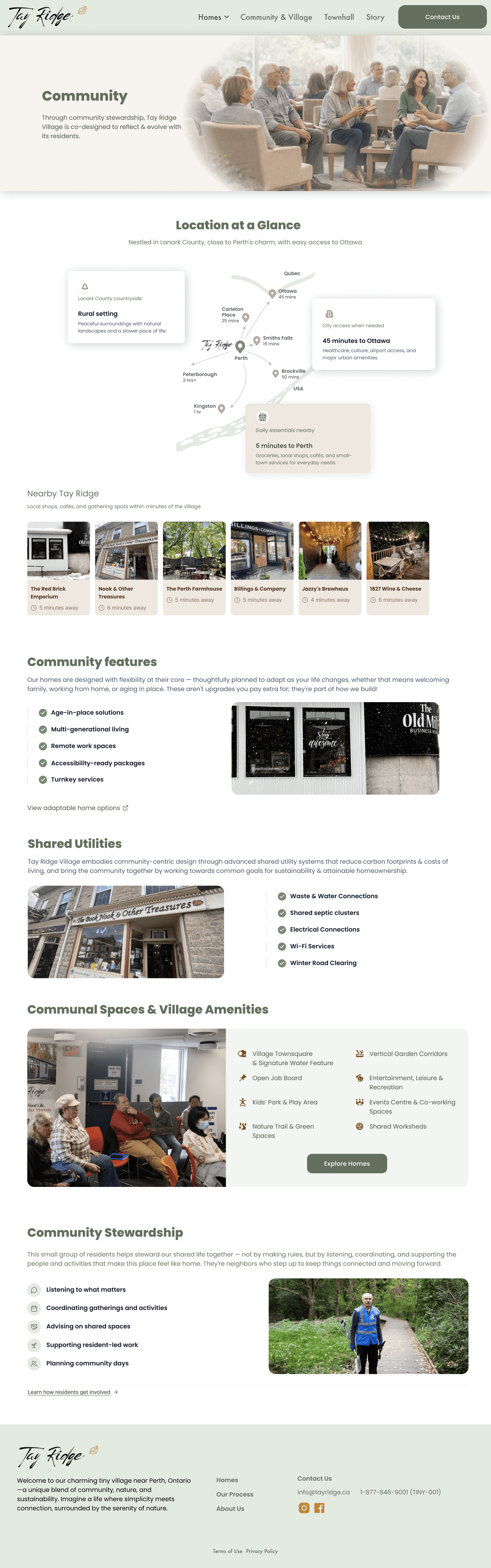
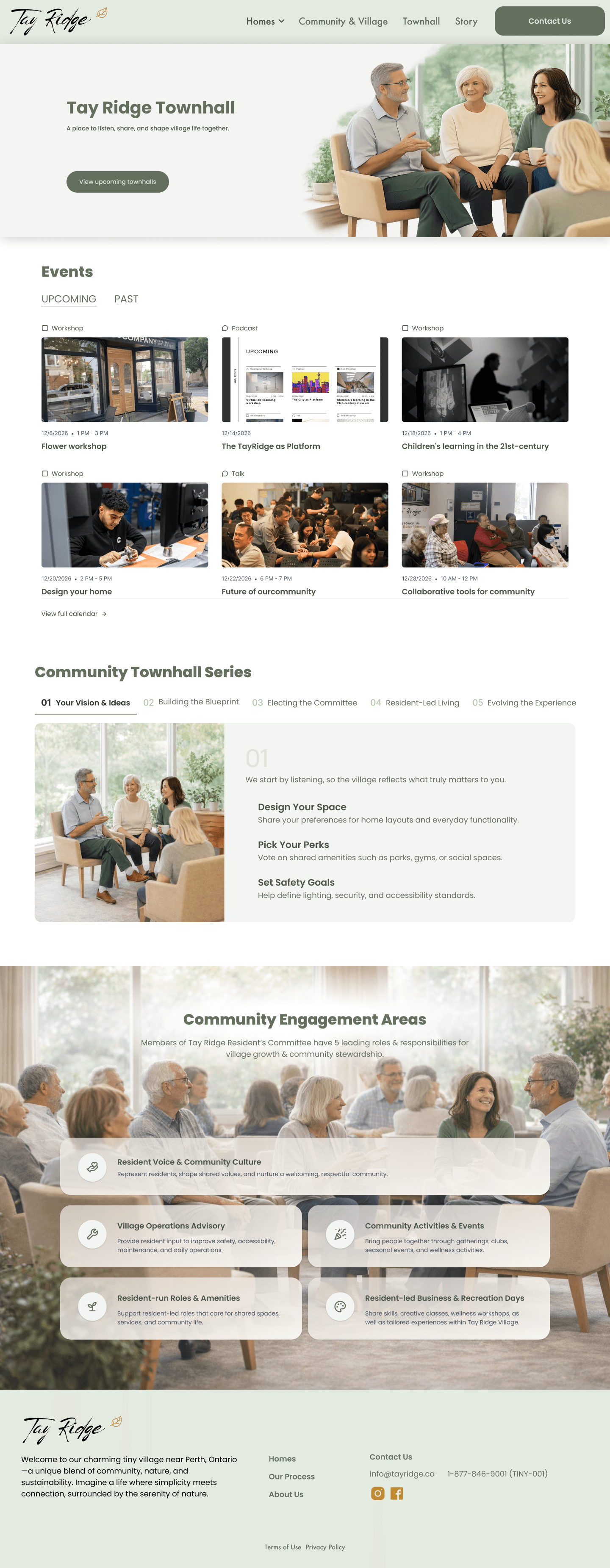
Only after structure was validated did I enhance the UI. The goal was not to add marketing tricks, but to quietly support user confidence through visual hierarchy and rhythm.
Key UI Enhancements
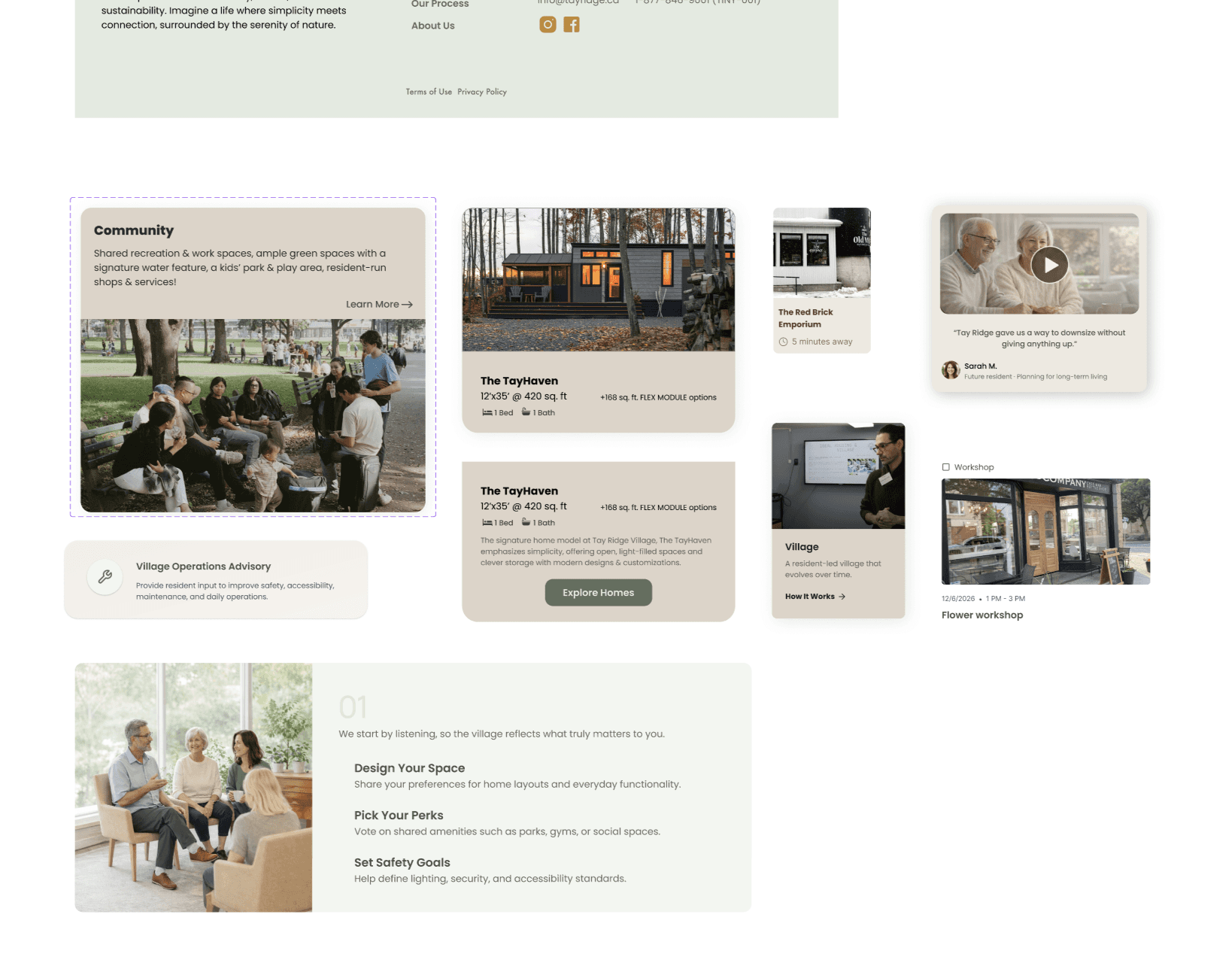
After
2. Hierarchy through typography & spacing
Clear section prioritization
Shorter, more scannable copy
Stronger headings where decisions happen
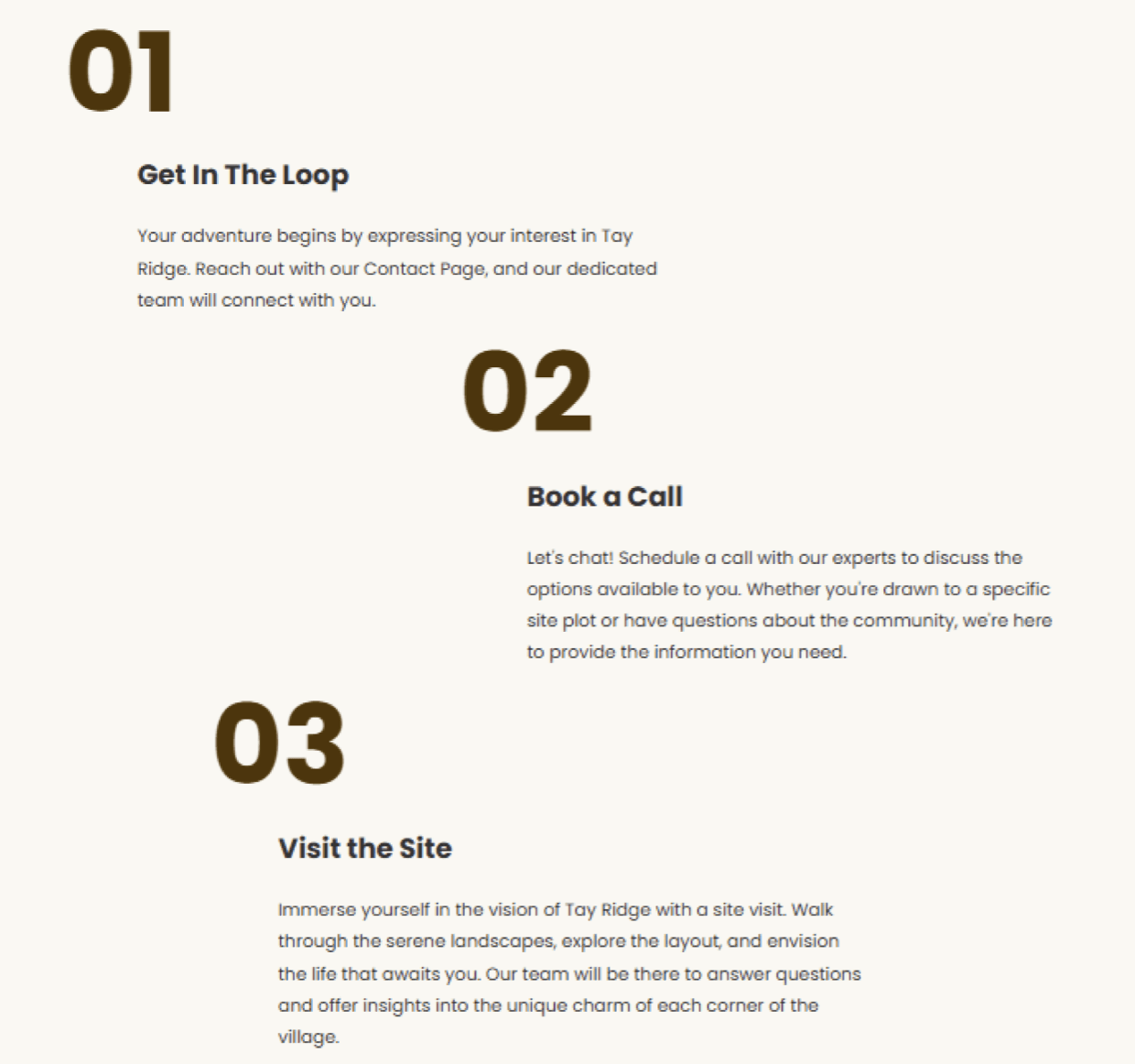
Before
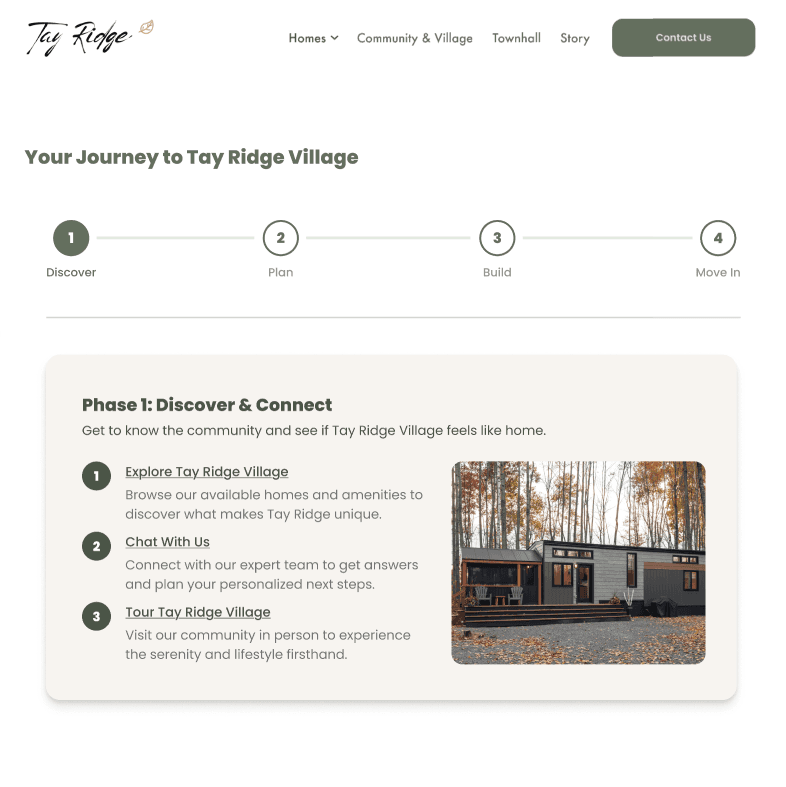
After
3. Visual rhythm to reduce monotony without adding noise
Related sections flow naturally into one another
Soft visual breaks replace hard dividers
Repetition is intentional, not mechanical
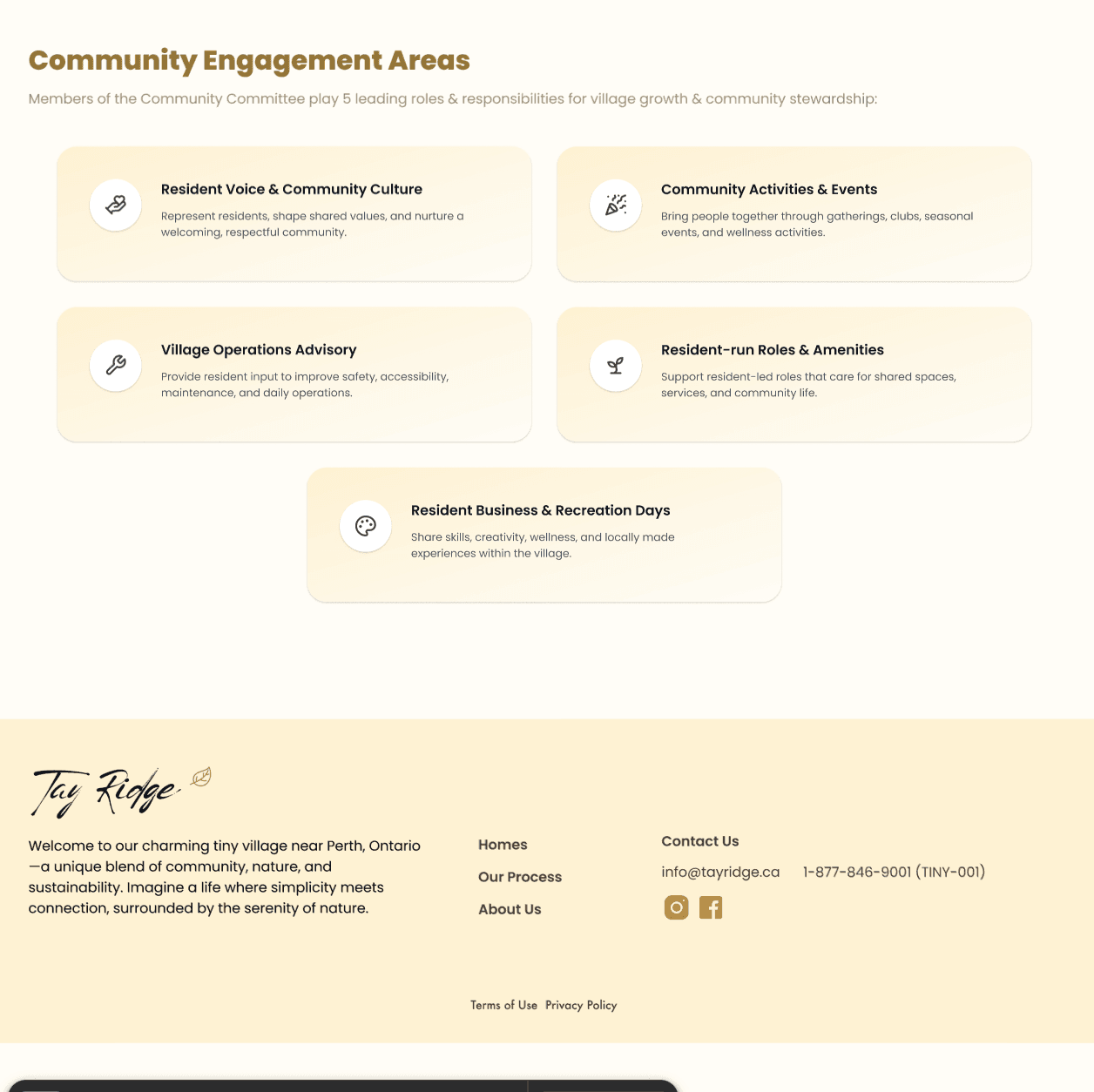
Before
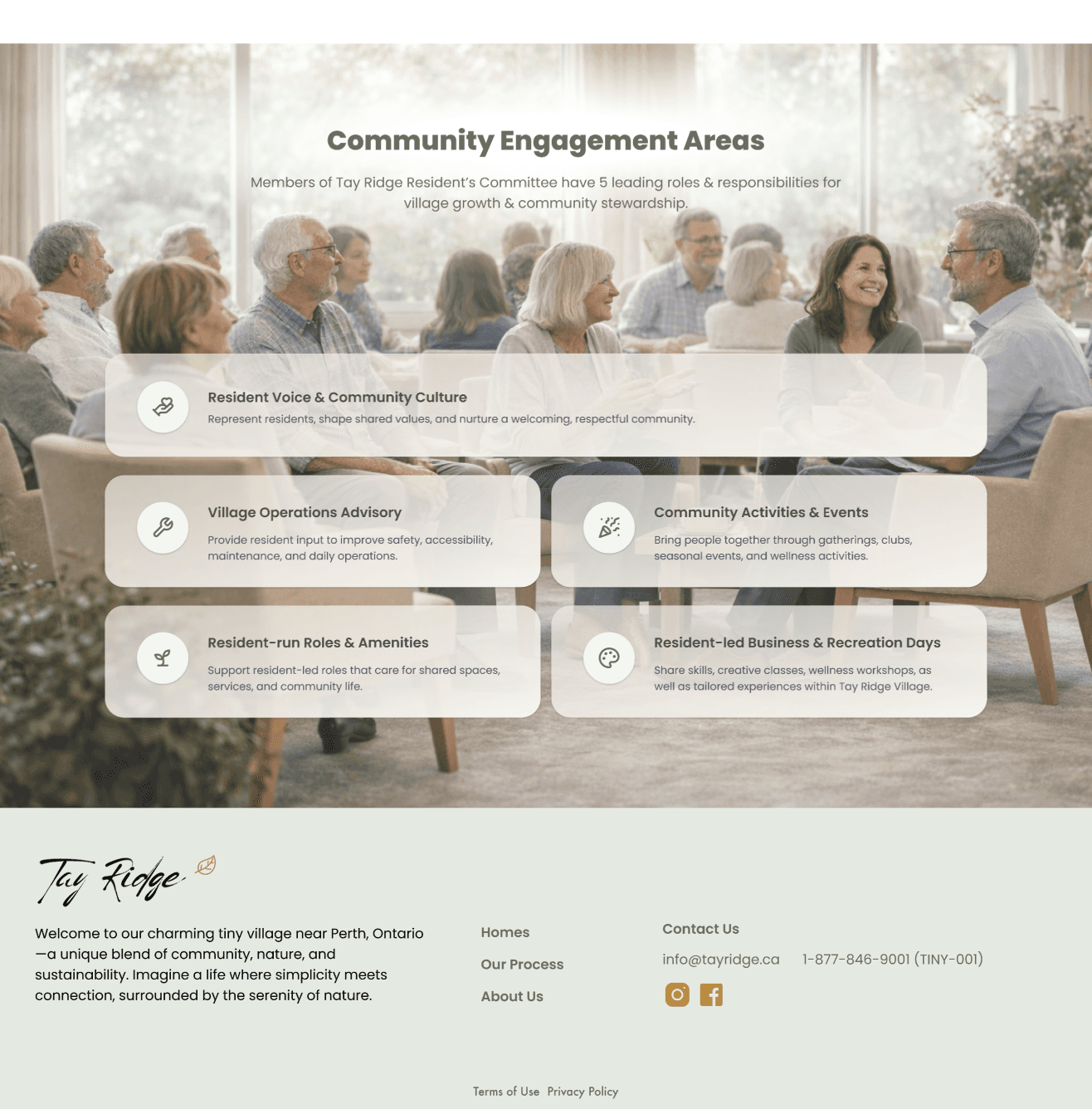
After
4. Subtle emotional reinforcement at the right moments
Nature imagery reinforces trust and warmth
Testimonials appear before contact, not earlier
Emotional language never interrupts factual exploration
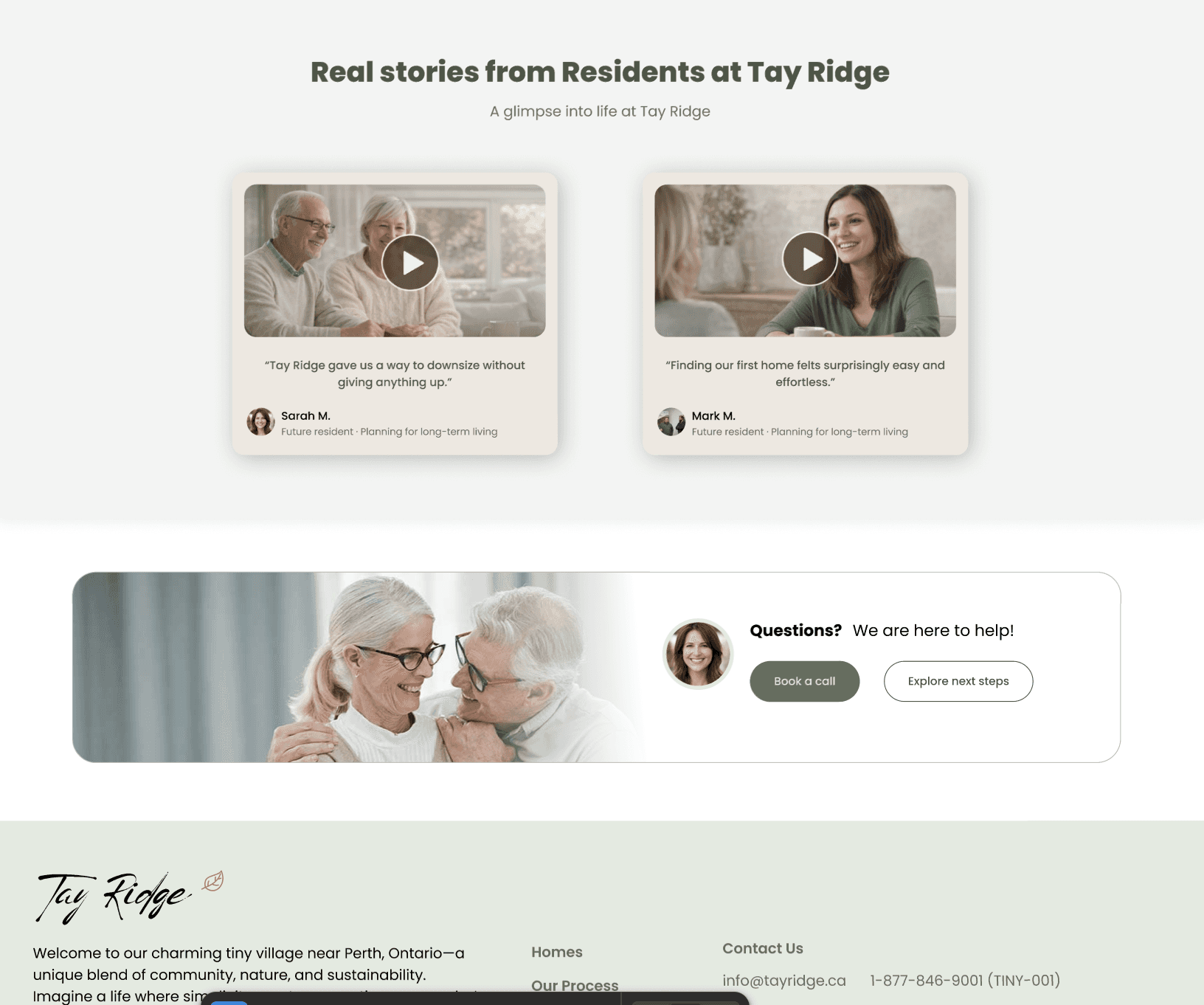
After
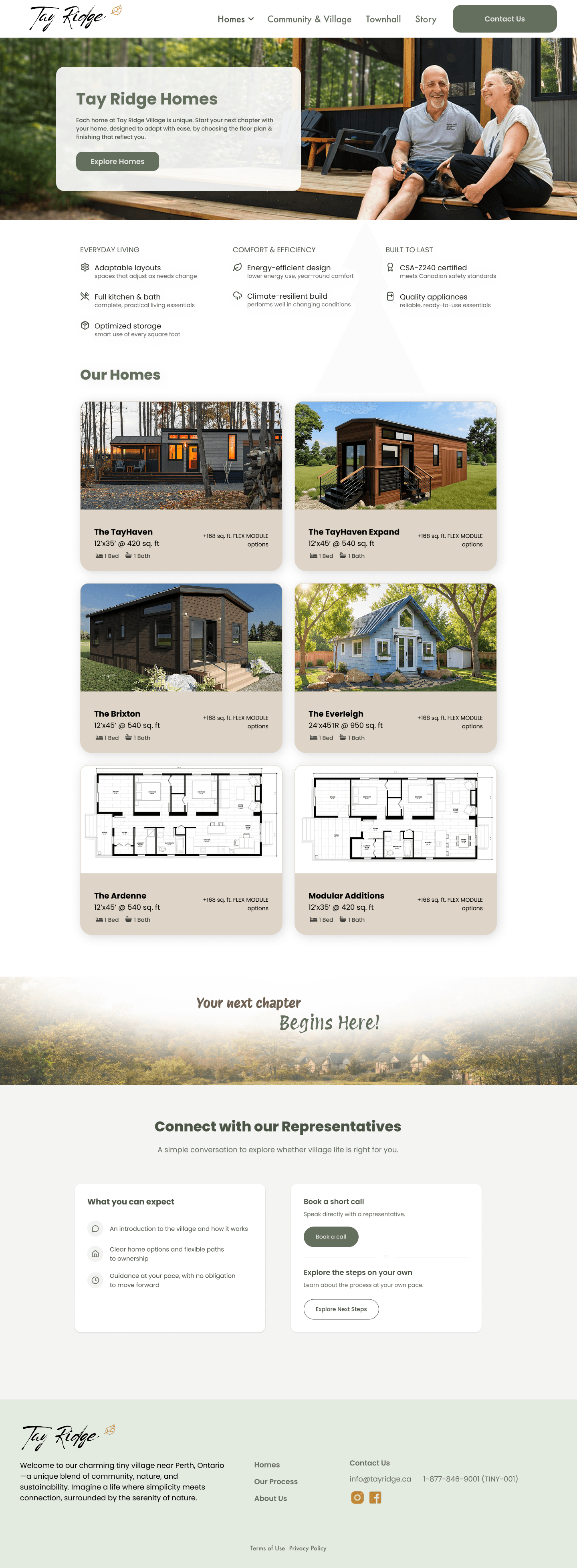
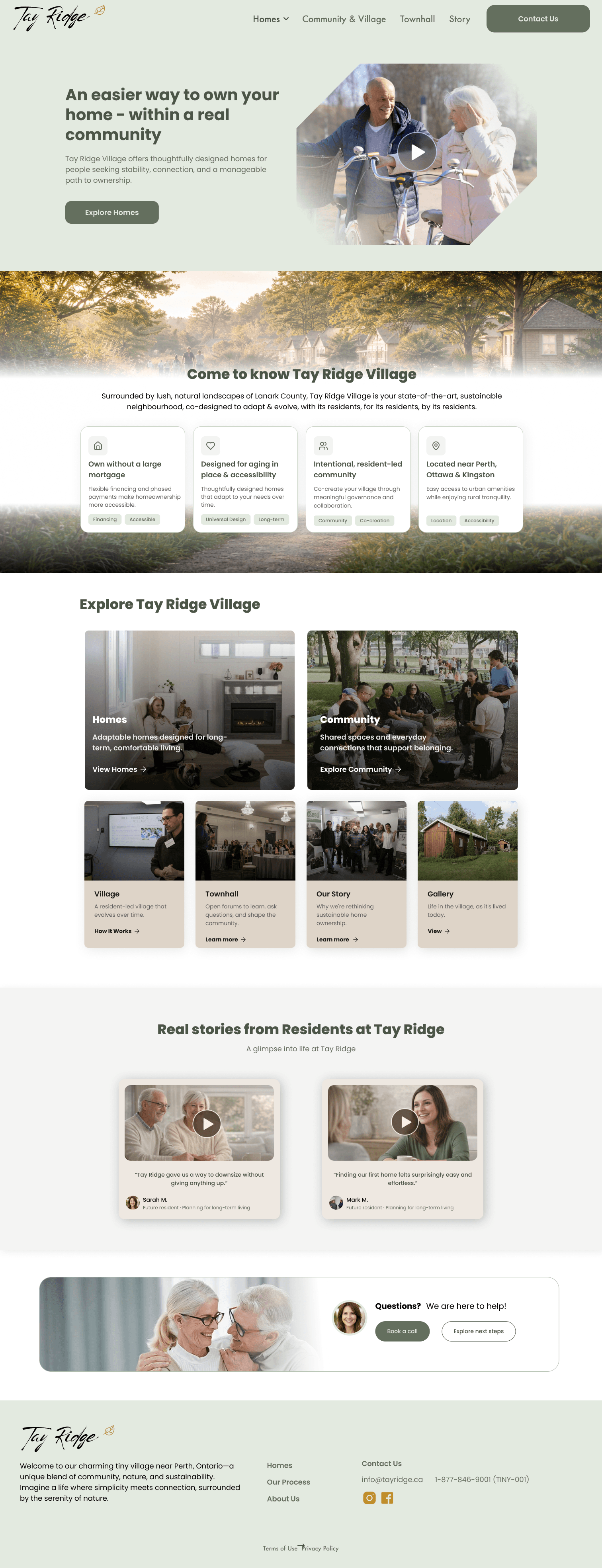
Final Outcome
What improved
Clearer narrative flow across the page
Easier transition from understanding → exploring → contacting
More confidence without pressure
UI that supports content instead of competing with it
The final experience feels intentional, calm, and aligned with the values of a community-led housing project.
Reflection & Next Steps
What I’d do next
After the final review, the PM approved the design to move forward into development as the team was preparing for an upcoming event introducing the project to future residents.
In the next stage, a brand manager will collaborate with me to ensure the experience and visual language align with the broader brand.
Success metrics
• Increase CTA engagement by 20–30%
• Achieve 60–70% scroll depth across the landing page
What this project reinforced
Good UX isn’t about adding more — it’s about adding at the right moment.